A healthy lawn can completely transform the appearance of your garden. However, even well-maintained lawns can develop unsightly brown patches, yellowing grass or thinning areas that seem to appear overnight.
Many homeowners assume their lawn simply needs more water or fertiliser, but the real cause may be a lawn disease.
Fortunately, most lawn diseases can be treated successfully if caught early.
What Causes Lawn Diseases?
Lawn diseases are usually caused by fungi that thrive under certain weather conditions. They become more common when grass is stressed through:
- Warm, humid weather
- Excessive rainfall
- Poor drainage
- Overwatering
- Cutting the grass too short
- Excessive thatch
- Poor air circulation
The good news is that healthy, well-maintained lawns are much less likely to suffer serious outbreaks.
Common Lawn Diseases in the UK
Red Thread
One of the most common lawn diseases seen in UK gardens.
Signs include:
- Pink or red thread-like growths on grass blades
- Irregular brown patches
- Slow-growing grass
Red Thread is often linked to lawns that are lacking nutrients, particularly nitrogen.
Fusarium Patch
Also known as Microdochium Patch, this disease is common during autumn, winter and early spring.
Symptoms include:
- Circular orange or brown patches
- White or pink fungal growth during damp mornings
- Grass dying in affected areas
Poor drainage and prolonged damp conditions usually make the problem worse.
Dollar Spot
Dollar Spot produces numerous small straw-coloured patches roughly the size of a £2 coin.
It is often caused by:
- Dry conditions
- Low soil fertility
- Infrequent feeding
Fairy Rings
Fairy Rings are caused by fungi growing beneath the soil.
They may appear as:
- Dark green rings
- Brown circles
- Mushrooms appearing in circular patterns
Although they can look dramatic, many Fairy Rings can be successfully managed with the correct treatment.
Is It Actually a Disease?
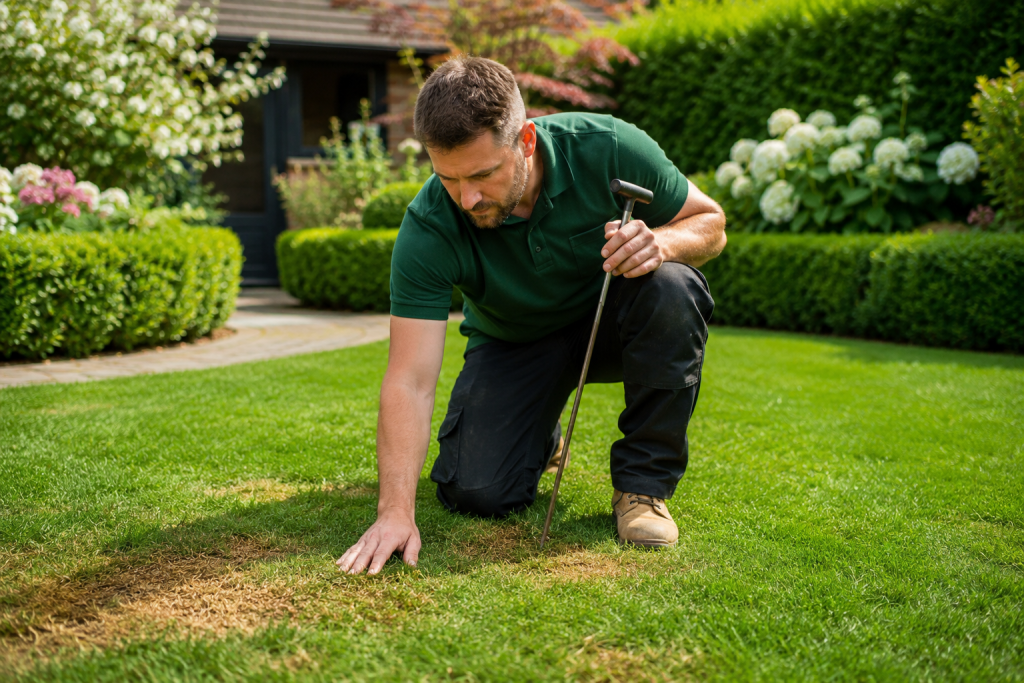
Not every brown patch is caused by fungus.
Other common causes include:
- Dog urine
- Leatherjackets
- Chafer grubs
- Drought stress
- Compacted soil
- Poor drainage
Correct diagnosis is important before any treatment begins.
Preventing Lawn Disease
Simple maintenance can significantly reduce the risk of lawn disease.
Good practice includes:
- Mowing regularly without cutting too short
- Feeding the lawn appropriately
- Improving drainage where necessary
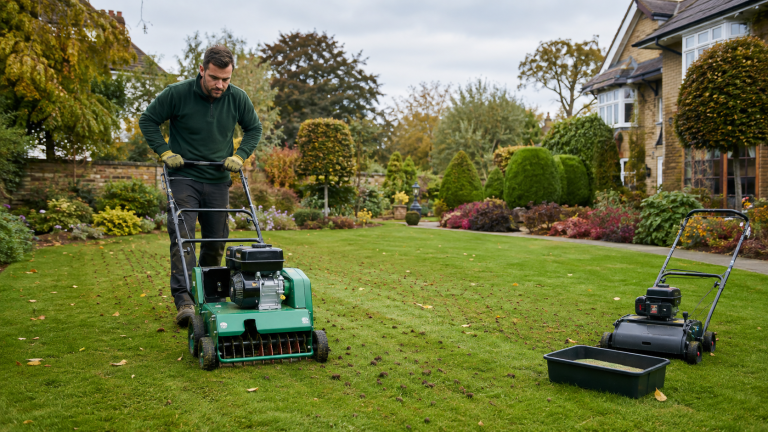
- Scarifying to remove excess thatch
- Aerating compacted soil
- Watering deeply but less frequently
- Removing fallen leaves during autumn
These steps help create stronger grass that is naturally more resistant to disease.
When Should You Call a Professional?
If large sections of your lawn are affected or the problem keeps returning, professional treatment can often save the lawn before more extensive damage occurs.
A specialist can identify the underlying cause, recommend the correct treatment and advise whether your lawn would benefit from services such as scarification, aeration, overseeding or complete lawn renovation.
Treating the cause rather than simply the symptoms usually delivers much longer-lasting results.
L&J Outdoor Services Can Help
At L&J Outdoor Services, we help homeowners across Essex restore tired, unhealthy lawns. Whether your grass is suffering from disease, poor drainage or general wear and tear, we can assess the problem and recommend the most effective solution.
If your lawn isn’t looking its best, contact our team for professional advice and practical lawn care services that will help your garden recover and thrive throughout the year.