After a busy summer, many lawns begin to look a little worse for wear. Regular use, dry weather, children playing, garden furniture and repeated mowing can leave the grass thin, compacted or covered with bare patches.
The good news is that September is one of the best times of year to repair this damage. The soil is usually still warm from the summer, while cooler temperatures and increased rainfall create favourable conditions for new grass seed to germinate.
With the right treatment now, your lawn can establish stronger roots before winter and return thicker, greener and healthier next spring.
Signs Your Lawn Needs Some Attention
Not every lawn requires a complete renovation. However, there are several signs that some professional autumn lawn care could be worthwhile:
- Thin or patchy grass
- Bare areas caused by furniture, paddling pools or heavy use
- Moss growing between the grass
- Water sitting on the lawn after rainfall
- Hard or compacted soil
- A thick layer of dead grass and organic matter
- Weeds beginning to dominate
- Grass that looks pale or struggles to grow
These problems rarely disappear without intervention. In fact, leaving them untreated over autumn and winter can allow moss, weeds and waterlogging to become more established.
Why Is September Ideal for Lawn Renovation?
Successful lawn repair depends heavily on the condition of the soil and the weather.
During September, the soil generally retains enough summer warmth to support seed germination. At the same time, the cooler air reduces the likelihood of newly emerging grass drying out as quickly as it might during the height of summer.
There is also less competition from aggressive summer weed growth. This gives new grass a better opportunity to establish before temperatures fall significantly.
Although lawn renovation can sometimes be carried out later in autumn, waiting too long increases the risk of cold or excessively wet weather slowing germination.
Start by Cutting the Lawn
Before renovation work begins, the grass should be cut to a manageable height. This makes it easier to assess the condition of the lawn and allows treatments to reach the soil more effectively.
The lawn should not be scalped. Cutting the grass extremely short can weaken it and make recovery more difficult. The aim is to create a tidy, even surface while retaining enough healthy growth to support the lawn during the renovation process.
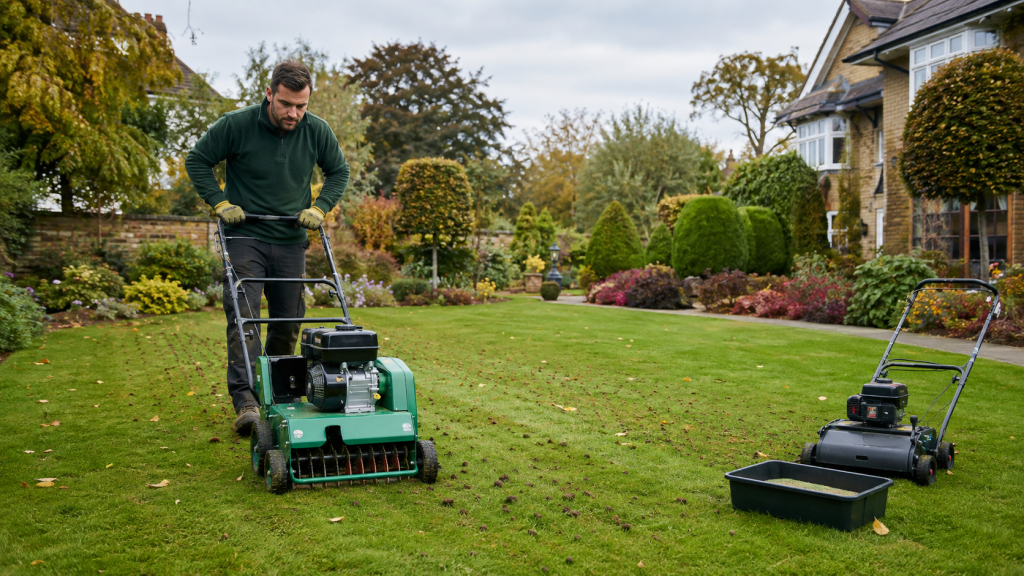
Remove Thatch and Moss
Thatch is the layer of dead grass, moss and other organic material that builds up between the green grass and the soil.
A small amount can be beneficial, but a thick layer prevents water, air and nutrients from reaching the roots. It can also create damp conditions in which moss and certain lawn diseases may thrive.
Scarification uses specialist equipment to remove this unwanted material. The lawn can look untidy immediately afterwards, particularly when a large amount of moss or thatch has been removed. However, this temporary disruption creates the conditions needed for stronger and healthier grass growth.
Aerate Compacted Soil
Compaction is a common problem in frequently used gardens. People walking across the lawn, children playing and heavy garden furniture can gradually press the soil particles together.
When this happens, grass roots struggle to access sufficient air, water and nutrients. Rain may remain on the surface rather than soaking into the ground, contributing to muddy patches and moss growth.
Aeration creates small holes in the lawn, helping to relieve compaction and improve drainage. It also allows moisture, oxygen and nutrients to reach the root zone more easily.
Areas with heavy clay soil, which is common in parts of Essex, may particularly benefit from regular aeration.
Overseed Thin and Bare Areas
Once the lawn has been scarified and aerated, grass seed can be applied to thin or damaged sections. This process is known as overseeding.
The choice of seed matters. Some grass varieties are better suited to ornamental lawns, while others are more tolerant of shade, children, pets or regular foot traffic. Using an appropriate seed mixture helps produce a lawn that suits how the garden is actually used.
Good contact between the seed and the soil is essential. Simply scattering seed over a thick layer of thatch is unlikely to produce an even result.
Apply an Appropriate Autumn Lawn Feed
Grass still requires nutrients during autumn, but its needs are different from those of spring and summer.
A suitable autumn lawn feed supports healthy root development and helps strengthen the grass ahead of colder weather. Applying an unsuitable product or using too much can scorch the lawn or encourage soft growth that is more vulnerable during winter.
The condition of the lawn should always be assessed before any treatment is applied.
Keep Newly Seeded Areas Moist
Newly sown grass seed must not be allowed to dry out while it is germinating. Natural autumn rainfall can help, but it may still be necessary to water the lawn during dry periods.
Water should be applied gently. A powerful stream can wash seed into piles and result in uneven growth.
Newly seeded areas should also receive as little foot traffic as possible until the grass has established. Moving furniture, play equipment and other heavy items away from repaired sections will give the young grass a better chance of surviving.
Avoid Cutting New Grass Too Soon
It can be tempting to mow as soon as the new grass becomes visible, but young seedlings need time to develop sufficient strength.
The first cut should only take a small amount from the top of the grass. Sharp mower blades are important because blunt blades can pull young plants from the soil rather than cutting them cleanly.
As autumn progresses, mowing will become less frequent. However, the lawn may continue growing whenever conditions remain mild.
Can Every Lawn Be Repaired?
Many tired lawns can be dramatically improved through scarification, aeration, overseeding and feeding. However, repeated problems may indicate an underlying issue.
Persistent waterlogging, deep shade, poor soil, damaged drainage or unsuitable grass varieties may prevent a straightforward renovation from delivering lasting results. In these situations, it is important to identify the cause rather than repeatedly treating the visible symptoms.
A professional assessment can determine whether the lawn needs seasonal treatment, more extensive renovation or complete replacement.
Give Your Lawn the Best Possible Start This Autumn
September provides a valuable opportunity to repair summer damage and prepare your lawn for the months ahead. Acting while the soil remains warm can help new grass establish before winter, producing a thicker and healthier lawn next spring.
L&J Outdoor Services provides professional lawn care and garden maintenance for homes, commercial premises and managed estates across Brentwood and the surrounding areas.
Whether your lawn requires scarification, aeration, overseeding or more extensive attention, our experienced team can assess its condition and recommend the right approach.
Contact L&J Outdoor Services today to arrange a free, no-obligation quotation.